Balancing Feminine & Masculine Design in Your Home


Creating Spaces That Feel Beautiful, Comfortable & Timeless
At Julia + Elizabeth, we believe the most inviting homes rarely lean too far in one direction. A room that feels overly delicate can lack warmth and grounding, while a space that is too stark or heavy can feel cold and unwelcoming. The magic often happens in the balance — where feminine softness meets masculine structure.
The best interiors blend strength and softness, elegance and comfort, refinement and practicality. Whether your style leans coastal, traditional, modern, or transitional, balancing masculine and feminine elements creates a home that feels layered, lived-in, and timeless.
What Does Feminine vs. Masculine Design Mean?
These terms are less about gender and more about design characteristics.
Feminine Design Elements
Feminine interiors often include:
Curved lines and softer silhouettes
Upholstered furniture
Lighter color palettes
Textures like linen, velvet, or boucle
Decorative details and layered accessories
Florals, wallpaper, and organic shapes
Soft lighting and cozy accents

Beautiful Floral; Bowood by Cowan & Tout
Masculine Design Elements
Masculine interiors typically feature:
Clean lines and stronger shapes
Darker woods and richer tones
Metal, leather, and stone finishes
Structured furniture
Minimal styling
Architectural details
Bold contrast and grounding pieces
A well-designed room usually includes both.

Why Balance Matters
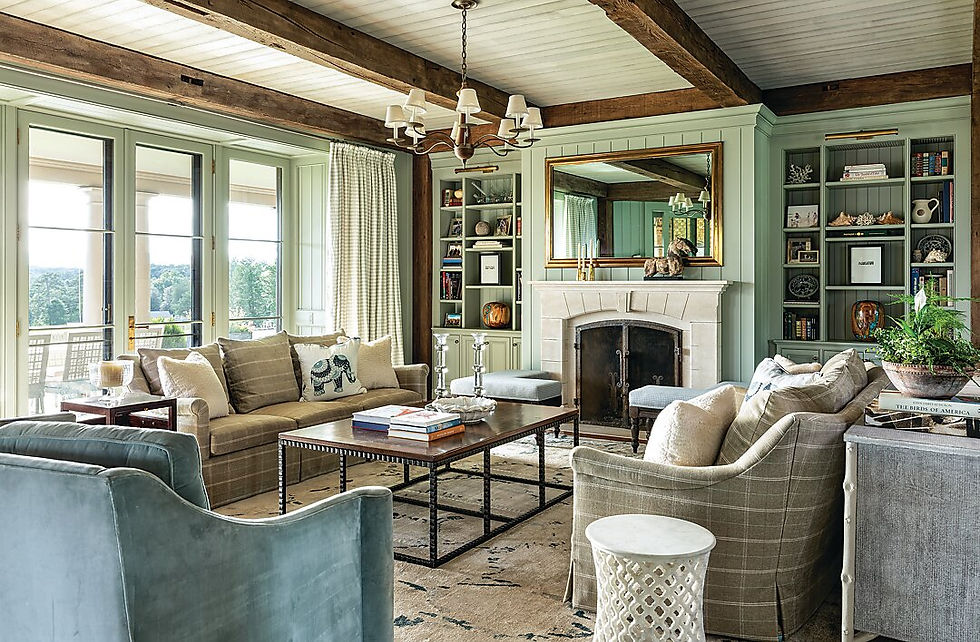
Homes feel more complete when they combine opposing elements. A soft linen chair feels more interesting next to a dark wood table. A tailored sofa becomes more inviting when layered with textured pillows and throws.
Balancing masculine and feminine design:
Creates visual depth
Makes rooms feel more welcoming
Keeps spaces from feeling overly trendy
Helps couples or families blend different tastes
Adds sophistication and warmth simultaneously
The goal is not perfection — it is harmony.

Start with Your Foundation Pieces
Furniture sets the tone for the room. One of the easiest ways to balance styles is by pairing structured pieces with softer accents.
For example:
A clean-lined wood dining table paired with upholstered dining chairs
A tailored sofa softened with curved accent chairs
A dark office desk balanced with lighter fabrics and layered textures
A masculine coffee table paired with organic accessories and greenery
At Julia + Elizabeth, we love using beautifully upholstered chairs to soften a room while still maintaining timeless structure and sophistication.
Mix Materials Thoughtfully
Some of the most beautiful rooms combine contrasting materials:
Wood + linen
Marble + rattan
Metal + velvet
Leather + woven textures
Dark finishes + soft neutrals
These combinations create rooms that feel collected rather than overly designed.
If your room feels too feminine, add grounding materials like darker woods, black accents, or tailored furniture silhouettes.
If your room feels too masculine, incorporate texture, softness, layered fabrics, wallpaper, or curved shapes.

Color Plays a Big Role
You do not have to choose between all-neutral or overly dramatic spaces.
Balanced homes often use:
Warm whites and creams
Taupe, camel, and greige
Soft blues and sages
Charcoal mixed with lighter textures
Navy paired with natural materials
Contrast is important. A room filled entirely with pale tones can feel flat, while too many dark tones may feel heavy.
The key is layering.
Don’t Forget the Power of Shape
One of the easiest ways to create balance is through shape.
If your room has:
Boxy furniture
Straight architectural lines
Large dark pieces
Try adding:
Rounded chairs
Curved lamps
Circular mirrors
Soft drapery
Organic accessories
Likewise, if your space feels overly soft, anchor it with structured seating, clean-lined tables, or stronger architectural lighting.

Balance Creates Timeless Homes
Trends come and go, but balanced interiors tend to feel timeless because they are rooted in contrast and comfort.
The most beautiful homes are not overly masculine or overly feminine — they feel personal, layered, welcoming, and lived in.
That balance is what creates rooms people truly love spending time in.
At Julia + Elizabeth, we believe thoughtfully chosen furniture can help create spaces that feel both elegant and comfortable — where softness and structure work beautifully together.